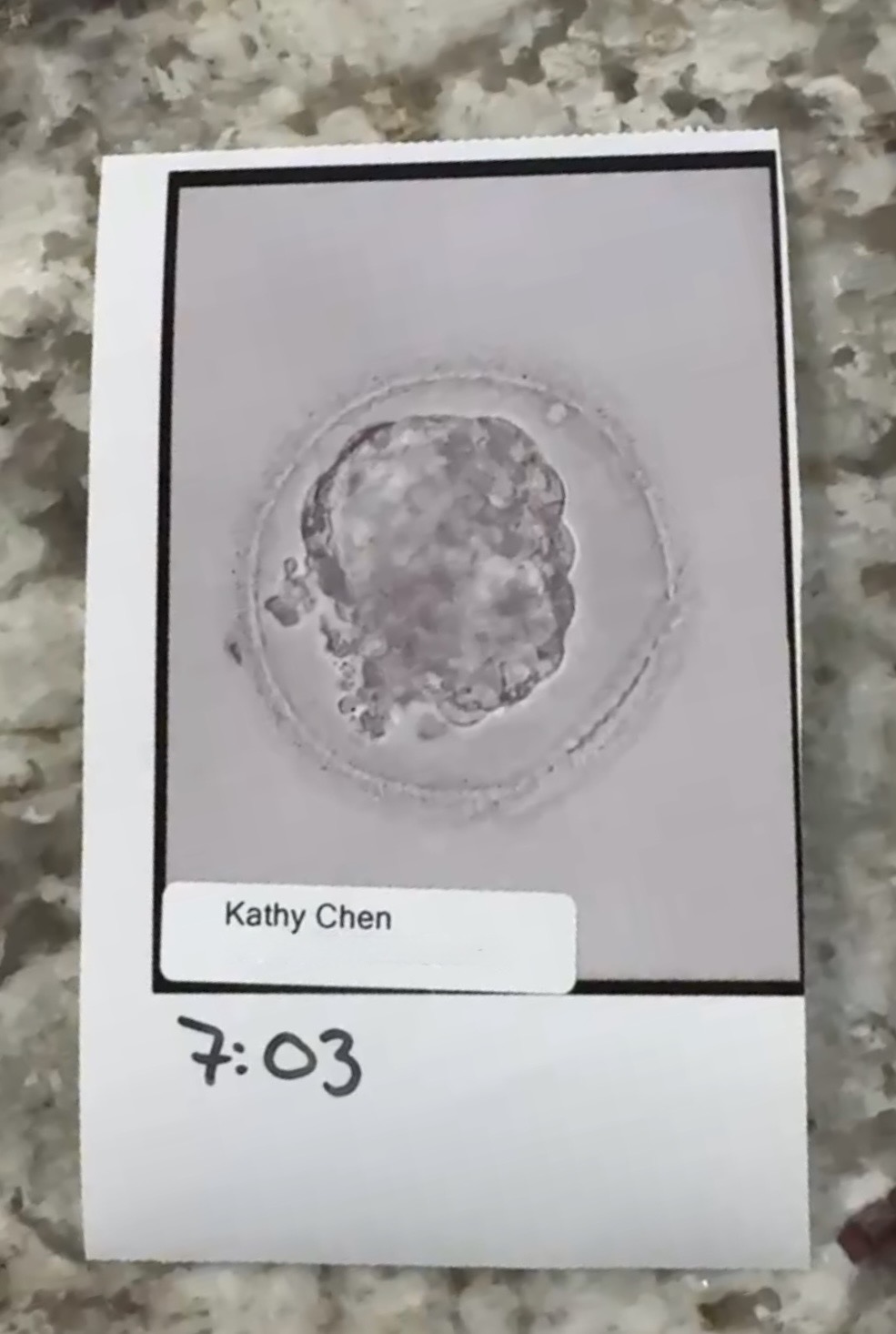
This week I’m entering my 38th week of pregnancy, and it feels surreal that we’re so close to meeting our baby boy. There was a time where it felt like this day was so far away, or potentially forever out of our reach. From our first positive pregnancy test until now, it has been almost 3 years to the day. I want to acknowledge that I’m incredibly grateful for my husband who is the one who remained unwaveringly optimistic through the entire journey, for modern science, for my incredible fertility doctor and clinic in whom I had the utmost trust, and for the constant support from our friends and family along the way.
However, as I reflect on all the things that helped me get through some of the most emotionally challenging times of my life, one thing I would change if I could go back in time is to keep our journey closer to our chest and to not have openly shared it with as many people as we did. While knowing that everyone was thinking of us and praying for us was at times a source of comfort, the constant check-ins and questions about how things were going, over time, added to the emotional weight that I was already carrying. This post is for the people trying to show up for someone going through IVF, and to offer an additional perspective on what they may be going through.
If you love someone who’s trying to conceive, you are probably already all too familiar with the instinct to say something encouraging. “It’ll happen when it’s meant to.” “I know someone who tried for years and then it worked.” “All you need is one!” I understand where those words come from. But having been through some of the hardest stretches of trying to conceive myself, I can tell you that a lot of the time, those words land differently than they’re meant to. They start to feel empty after you’ve heard a version of them for the hundredth time. And other people’s success stories – even when told with the best intentions – often felt like comparisons to situations that had nothing to do with mine. Hearing someone else’s happy ending didn’t make the waiting for mine any easier. Some of the things we reach for to comfort each other can accidentally add weight instead of taking it off.
For many of us, IVF isn’t where the story starts. It’s where you land after something else didn’t work. Maybe there were endless months or years of trying to conceive naturally that never got anywhere, filled with frustratingly shitty ovulation tests, planned sex windows (the least sexy thing about sex), and lots of negative pregnancy tests. Maybe there was a miscarriage – or two, or three – before you ever sat down with a fertility doctor. Maybe you did a few rounds of IUI first, each one its own cycle of hope and disappointment, before anyone even said the words “let’s talk about IVF.” By the time you’ve decided to do IVF and get to the “first step” of the egg retrieval, you’re not starting from zero. You’re starting from a place that already has a mountain of grief and frustration built into it.
For those who have not gone through IVF and looking to support someone you love, you likely already know about the physically demanding aspects of IVF. You know about the countless doctors appointments, the blood draws and panels, the shots, the bruised stomach and thighs. And sure, that’s real, and it’s a lot. But the needles and shots aren’t actually the hardest part – at least it wasn’t for me. The hardest part is deciphering the constant changes being made to your treatment plan, trying to make sense of all the reasons why things are or aren’t working, and then the waiting.
People don’t talk enough about how much of IVF is just waiting for news. Waiting on male and female fertility testing, to find out if there’s even a clear reason any of this has been happening. Waiting on hormone and thyroid panels, because apparently your entire reproductive system is negotiating with your thyroid behind your back. Waiting on blood draws, and then waiting for someone to call you back about the blood draws. Waiting to even be cleared to start hormone treatment, like there’s a test before the test. Then the actual stimulation phase starts, and now you’re waiting on monitoring appointments every couple of days, watching a follicle count that feels like Squid Games at times, watching your doctor mentally gamble if it’s worth letting go of 3 good follicles for the chance to to gain 5 more. Waiting to see how many eggs get retrieved. Waiting to hear how many of those eggs fertilized. Waiting to see how many embryos make it to day 5, watching the number get inexplicably (and sometimes drastically) smaller at every single stage. Waiting on genetic testing results, if you’re doing PGT. Waiting for a transfer date – if there are even any euploid embryos to transfer at this point. Because if not, you might find yourself in a position trying to decide if you’re comfortable transferring mosaic/abnormal ones, weighing if the genetic abnormalities are worth the potential risk of miscarriage or birth defects further down the road. Or maybe you find yourself in the gut-wrenching position where there are no viable embryos at all and you have to decide if you’re physically or emotionally ready to start another round of egg retrievals. If you’re lucky enough to have something to transfer, then there’s the two-week wait for a blood test to confirm a pregnancy, which somehow manages to be the longest two weeks of the entire process, even after everything that came before it.
Every single one of these checkpoints is waiting for an outcome that feels entirely outside of your control. You’re just sitting with your phone, waiting for someone else to tell you whether the thing you want most is still possible. That’s a specific kind of exhausting that doesn’t show up in a progress photo. I think that’s the piece that’s easy to miss from the outside. IVF isn’t one hard thing. It’s a long sequence of small waiting rooms, physical and emotional, stacked one after another. And you’re supposed to keep functioning at work and in your regular life the whole time, trying not to let the constant wondering consume your sanity.
Towards the end of last year after completing my fourth egg retrieval, I just started lying and said we didn’t get results back on embryos yet (even though we did) and that were waiting until 2026 to decide what to do (even though we did the transfer in November of 2025) because I felt like the pressure of everyone else’s hopes and expectations was getting too heavy to pile on top of managing my own.
I also want to call out something that I think is important to understand. Women carry the weight of this journey differently, and none of those ways are wrong. Despite my own losses and setbacks, I never felt the urge to pull back from celebrating my friends’ pregnancies and births. That’s just how I wanted to show up for them and for myself. But that’s not universal, and it shouldn’t have to be. Some women need distance. Some need to sit out the group text for a while, or skip the shower, or let someone else be first to comment on the announcement. For some, their hearts are too full of stress or grief to simultaneously hold joy for you in that moment. It’s not a reflection of how much they love or support you. It’s a reflection of how difficult it can be for them to be so close to the thing that feels so impossibly out of their reach. Let them show up in whatever way they actually can, even if that means not at all for now, instead of the way you expected they would.
If you’re the one on the outside wanting to help, here’s what I’ve come to realize would have meant more to me than unfounded optimism or comparisons:
- Don’t feel the need to relate. Saying, “I’m not going to pretend I know what this is like, but I’m here,” sometimes does more than trying to find common ground.
- Ask what kind of support they want, instead of assuming. Some people want to talk through every detail. Some people want a two-hour distraction where nobody brings it up at all. Both are valid, and sometimes it changes day to day.
- Skip the stories about someone else who “eventually got their miracle.” Even when it’s meant to comfort, it turns someone else’s outcome into a benchmark for mine, and most of the time it’s not the same situation.
- Let silence be okay. You don’t need the perfect words. Sometimes “that sounds so hard” and just staying on the phone is enough.
None of this requires understanding what IVF actually feels like from personal experience. It just requires listening to and believing someone when they tell you it’s hard, instead of trying to talk them out of the hard part.